



Podcast: Play in new window | Download
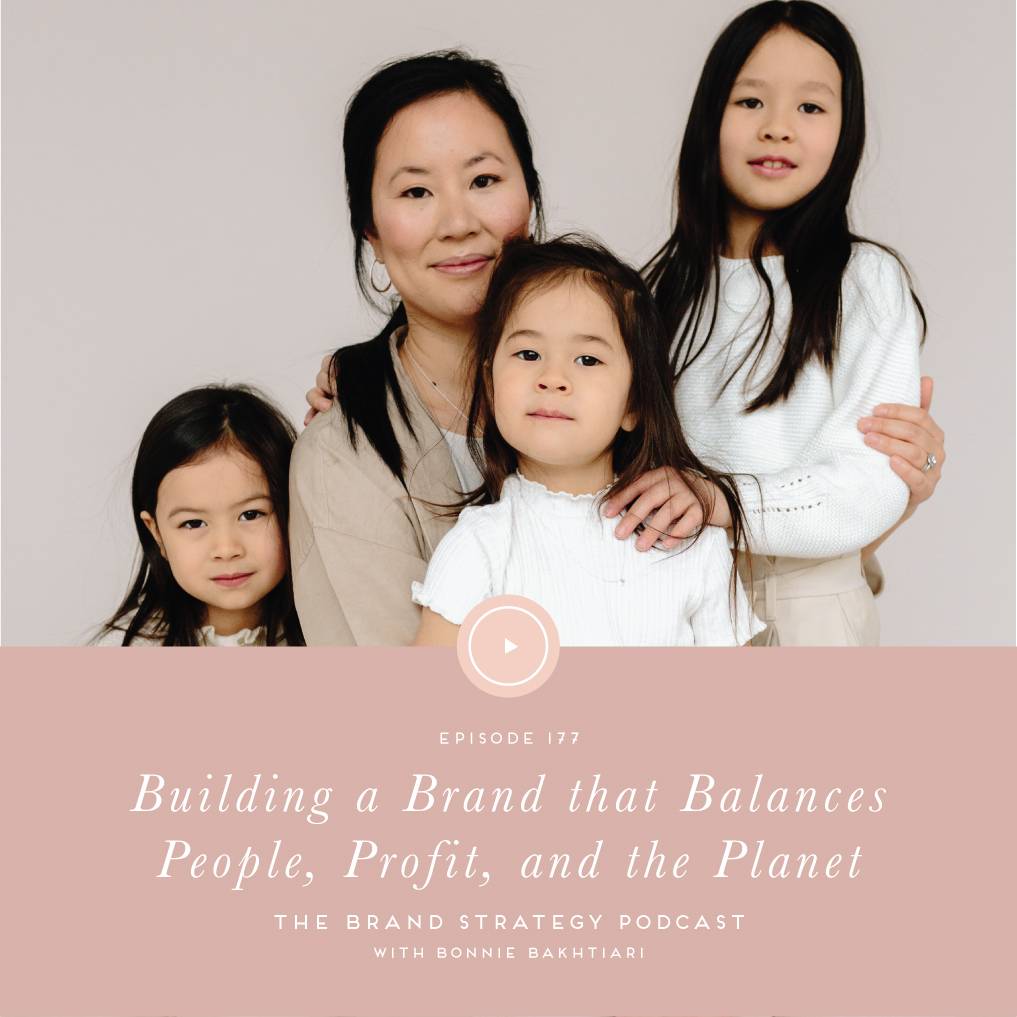
What impact are you making in the lives of the people around you? What about your brand?
Suzanne Vetillart is on a mission with her jewelry brand, Boma, to balance people, profit, and planet—the triple bottom line. While she wants to run a successful business, it’s important to her that she’s making differences in the lives of her employees and customers, as well as leaving a smaller footprint on the planet through sustainability.
The starting point in this journey is awareness and education.
Suzanne Vetillart is a mother of four and the CEO and 2nd generation owner of Boma Jewelry. Prior to joining the family business, Suzanne studied architecture at Columbia University in New York and later worked as an architect in three different countries. She went on to spend six years as Creative Director for a hospitality start-up in Bangkok before returning to her roots with Boma.
Suzanne is a proud advocate for social purpose corporations who believe in the triple bottom line: people, planet, and profits. She is an environmental advocate who is leading the change for her 200+ workers and vertical company to become completely carbon neutral by 2025.
Today she is a member of The Forbes Business Council, The American Sustainable Business Council, The Sustainable Fashion Alliance, and founder of the Boma Girl Fund and the Boma BIPOC Grant program. Boma is celebrating 40 years in business this year and continues to set the pace for sustainability and transparency in the jewelry industry.
Triple Bottom Line: People, Profit, & Planet
How are you impacting your world, people, and the planet? When planning for your business, there are three primary things to consider that Suzanne refers to as the triple bottom line: people, profit, and planet.
Impacting People
How you are impacting people? When Suzanne first got started in this family business, she saw how her parents we leaving a legacy not only for the family, but for the employees. The culture and environment that was created for those who made up the business was so important to her parents, that she knew carrying that tradition on was a requirement. The people in her company are the heart behind it—their loyalty to the brand is just as important as her loyalty to them.
This theme of legacy is highlighted throughout Suzanne’s journey and business—but what about the future of the company? It’s important to Suzanne that when her children are her age, they’re able to look at the company and see its impact on more than just success in profit, but in impact on families, employees, and customers.
Profitability
As a business owner, we all know that there is so much to consider when planning for a profitable and successful brand.
It’s important to look at your overall business and see where it can better serve your employees and your family! From products and services to workflows and retention in company culture.
Sustainability for the Planet
As a product based company, it’s really easy to dismiss all of the potential changes you could make for sustainability in your business due to the overwhelm.
Baby steps can get you there. It starts with awareness and education in knowing about your footprint. In taking over the brand, Suzanne could have simply said, this is how it’s always been done so I shouldn’t change it, but we all have the power to encourage and make an impact in this area of business.
Getting Started with Sustainability
It’s important to understand what impact your business is making and jump on the path to B Corp Certification, even if you aren’t interested in becoming certified.
To get started, you can read The B Corp Handbook and take the B Corp Assessment to help you identify where you can improve.
You don’t have to make every move right now—you simply have to want to make a difference.
Catch the Show Notes
Get to Know Suzanne (:45)
Suzanne’s Journey to the Family Business (2:12)
Suzanne’s Experience with Searching for More (7:52)
Understanding Your Business’ Impact and Footprint (9:48)
Loyalty & History in Boma’s Customer Base (14:48)
Suzanne’s Role & Mission in Boma (15:24)
Considering Her Daughter’s Views on the Brand in the Future (17:28)
Being Mindful of the Triple Bottom Line (20:16)
Creating Legacy (24:31)
Encouragement for Triple Bottom Line (30:21)
RESOURCES MENTIONED
FOLLOW ALONG
LIKE THE SHOW?
IN ORDER TO PROVIDE CONTENT YOU LOVE I WANT TO HEAR FROM YOU! SUBSCRIBE TO THE BRAND STRATEGY PODCAST AND LEAVE A 5-STAR REVIEW HERE. THE MORE REVIEWS, THE MORE I’M ABLE TO PROVIDE THIS FREE-ACTIONABLE CONTENT!

Review the Transcript:
Bonnie Bakhtiari 0:07
Hi friends and welcome to the brand strategy podcast a show created to equip you with the inspiration, encouragement and clarity you need to build a brand of your dreams. I’m your host Bonnie bakhtiari brand designer, strategist and founder of Illume retreat. From sustainable strategy to heartfelt encouragement. Each episode is designed to equip you with the tools you need to chase after your dreams because you deserve a brand that empowers you to do what you love, connects with your dream clients and offers a deep sense of fulfillment along the way. So grab a cup of coffee and join me on this journey. Welcome. Friends Welcome back to the brand strategy podcast where today we have such an incredible conversation lined up about building a brand that balances people profit and the planet. That incredible idea of the triple bottom line with Suzanne of Boma jewelry. Suzanne is a mother of four she’s the CEO of Boma jewelry, a factory owner and a proud advocate for social purpose corporations who believe in that triple bottom line which is all about people, the planet and profits. You might have seen her name listed as a current member of the Forbes Business Council, the American Sustainable Business Council, the sustainable fashion Alliance and the founder of the Boma girl Fund and the Boma grant program for VIP OC designers. Suzanne, thank you so much for coming on the podcast today and for having this conversation about building a brand that really honors that triple bottom line. I’m so excited to get to chat with you.
Suzanne 1:47
Thank you, Bonnie, I’m so excited to be here.
Bonnie Bakhtiari 1:50
Well, I am really excited to hear a little bit more about your incredible business. And of course I know we’ve got a great conversation in store today about you know, our primary topic. But before we dive into that, I would love it if you wouldn’t mind sharing just a little bit more about who you are the incredible work that you do and even maybe how you got started.
Suzanne 2:12
Yes, so my name is Suzanne VTR I’m the CEO of Boma jewelry, and I’m also a second generation owner of the company so Boma was actually founded by my parents in 1981, in Seattle, Washington, and I grew up with the company and I grew up sort of always wanting to avoid working for the family business. And so you know, since I was young, I you know, really love design and architecture. And so I really spent my college years and immediate immediately after that working in architecture and design and kind of not wanting to have anything to do with jewelry and fashion and the family business. And then you know, it really took me sort of, you know, 10 years in that career. And, you know, getting to the point where I was so burned out by the work that I really decided to, you know, make a pivot in my career. And at the time, I was based in Bangkok, Thailand, and I was on my fourth maternity leave. And I had, I had four kids under the age of five at home. And so I really find that to be like a turning point in my life because I thought I was doing what I wanted to do. And I thought was my passion since I was really young. And I was doing it but I was really not happy. And it took me that kind of extreme moment of like having so many kids and like burning myself out to get to the point where it really made me question like what do I want to do with my life because I love working. I love being entrepreneurial, I love, you know, hustling, I love, you know, growing, and I love taking care of my family. But you know, what I was doing wasn’t really, you know, giving me a sustainable balance of all of those things. So it was during that maternity leave that I actually went and kind of took a look at my family’s business. In Bangkok, we have a factory with about 200 workers and I know many of the people because i’ve you know, seen them since I was young, and they all know me. But it wasn’t until I kind of returned and sort of had a different perspective on my life. And, you know, when I started going back to the factory and kind of walking the floor and it would bring my kids with me, I really felt like the people who were there were happy. And they were really, you know, humble about sort of, you know, this career that they had chosen to, you know, basically either be an artisan, you know, who’s working with their hands every day and doing the same thing every day for like 20 or 30 years, and being really proud of that, you know, and it was really like a humbling learning experience for me to to go from, you know, working in a high pressure job that I thought was really glamorous but sort of real I think that it wasn’t very fulfilling. And then it was so striking to see people who were doing something, you know, very simple. But that required, you know, their their handicraft and their skill. And to see that, you know, at lunchtime, they were really happy and smiling and, you know, sharing bananas from their garden with like, their other co workers, and they were riding their bike home, and they were happy, you know, they were leaving at five. And so that was really a turning point for me where I was, you know, I was, I think I was looking for something I was looking for work that was, you know, that served someone just beyond myself. And that started a four year process for me to basically just start working in production to kind of learn, you know, all about the all the ins and outs of our jewelry, like where we source things, how things are made, who makes them, where does our quality come from, I basically learned that for about four years. And eventually, I moved back to Seattle to really kind of take over the business on the US side. And that’s, you know, where I’ve been so far is really trying to tell the story of how we make things by hand and the fact that there’s people behind that process. And we’re a family owned business. And we’re really proud of that. And I think the triple bottom line is really sort of, you know, a foundation that we’ve already been doing for about 40 years, we’re celebrating our 40th anniversary this year. So it’s not a new thing for us to be thinking about all those things holistically. But what is really new is for us to be talking about it with our customer.
Bonnie Bakhtiari 6:37
That’s so amazing. And actually, you just answered my question for me, as I was listening to you talk about this incredible journey that you had getting into the family business, I was kind of wondering, okay, like is that is that triple bottom line, something that’s always been a part of that brand, since the early days is that, you know, something that you introduced. And so hearing that that has been a set of values that your family has prioritized in that business over the last, I think you said 40 years, that is so amazing, and just speaks to me that really just highly of the fact that your brand is built on creating an incredibly quality product, but in a way where you’re not compromising on the people who are a part of that, that brand and, you know, hearing about the kind of experience that your factory workers have and how happy they are, that’s incredible. And then, you know, on top of that, the the impact that your manufacturing has on the planet and factory in those profits as well. So I’m just over here, so, so in awe of how you and your family have been thinking about that for, you know, decades at this point. That’s incredible.
Suzanne 7:52
Yeah, and I think, you know, just sort of speaking from the perspective of not wanting to work in this business, because I thought, you know, I wanted to, you know, pursue a career, you know, differently, or, you know, away from my family business, I think it was really, you know, a kind of very strong lesson of sort of, you know, me wanting to search for something, you know, to find myself outside, but you know, realizing that it was always here, you know, it kind of in front of me in front of my nose, but it really kind of taking me, you know, the whole process to sort of like go go somewhere else to see how green the grass was, you know where I was. And I think that that kind of stays with me every, every single day. And it really helps me to kind of find, you know, gratitude and everything that I’m doing. Because, you know, we’re I feel like it’s an impulse for us to always be searching for things outside or elsewhere or beyond. But you know, a lot of times the things are just, you know, right under our nose.
Bonnie Bakhtiari 8:50
That’s so true. And I really love that he made that point. I think that just, you know, personally in my own life, that’s been a lesson certainly not on, you know, such a grand scale, but I’ve been learning, you know, this idea of so often when we’re craving something external, or when we’re searching externally, there are so many things available to us internally that we’re overlooking, or like you said, kind of right under our noses, or right in front of it. So I can just really resonate with that idea. Out of curiosity, I know you said that that idea of honoring that triple bottom line has been something that’s been a part of the family business for 40 years now. What was the importance of balancing those three factors into the business? Do you do you remember – were you a part of maybe those conversations or have you and your family spoken about that sense of how that came to be?
Suzanne 9:46
Yeah, that that’s a really great question and I reflect on it often, you know, in so my parents are immigrants. You know, my mom is from Japan, and my dad is from Thailand. And you know, we my dad built the factory in his home country because he really knew that, you know, there was a lot, there’s a long history of, you know, creating precious metal jewelry in Thailand. And so I think a lot of these ideas, you know, whether they’re social or environmental, it’s really tied to, to culture. And, you know, in Thailand, the majority of our workers are Buddhist, and a lot of people, I mean, you know, whether you believe Buddhism is a religion, or, you know, however, you sort of see Buddhism, but, you know, one of the teachings is that it’s really about no harm. So it’s like, no harm to people, it’s no harm to the planet. And I just think it, it’s really always come from that sort of cultural or, you know, somewhat religious or philosophical idea of not causing harm to people. So you know, as a business, you know, wherever you are, you know, in your business, and, you know, as leader, it’s really just for you to kind of understand your own business footprint, and not wanting to cause harm within that. And so I think that’s really where the dedication and the commitment to kind of our workers comes from is that, you know, we really, instead of causing harm, we want to do something that actually builds people’s careers, and gives them something where they can be really proud about, you know, doing working for this company for 20-30 years, and sort of retiring, you know, with this company staying with this company, and that’s really important to us, because our products are handmade, you know, it’s all about the people behind them. I would say that, you know, when it comes to the environment, environmental aspect of our business, that is probably the area where we need the most improving, I think when it comes to like, our specific industry – jewelry – it’s actually highly polluting, you know, with precious metals, and, you know, gemstones that come from mines, you know, depending on where you source these materials, you know, there can be a huge environmental, you know, environment, hugely destructive, you know, environmental impact from that. So I think that’s where what we are really trying to lead on is sort of like we understand what our footprint is, and we’ve spent almost two years really trying to map out like, what is our carbon, you know, footprint? Like, how does that, you know, when when we make decisions here and there, like, how can we affect that, and it’s one of the biggest areas where we need to improve. And so that’s why I’m really excited that this year, our factories switching to solar, and so we’re, you know, switching away from renewable energies. And, you know, that was when we did this kind of baseline research until, like, where our most kind of what was our most degrading environmental impact, it was really about the production process, and it was about the type of energy use that we were using at our factory. So that’s really where we started. And we know, we’ve done all these different calculations to understand, you know, many different ways, though, by switching to solar, like, how does that impact? You know, actually, how is that actually understandable to like, an end consumer. And so, you know, for example, this is probably like a low estimate. But, you know, by us switching to, to solar, you know, we are basically making the equivalent of like, removing 1 million miles of passenger cars, like being driven on the road, or 54 million iPhone charges. So it’s, you know, I think that’s kind of what you know, our aspect to what we’re doing is that, because we’re a vertical company, we actually can have direct impact on our decisions. And then those direct impacts, we can communicate them, you know, to our customer in a way that is relevant, because these things are very abstract. And everything is really fragmented, it’s really hard for an end consumer to kind of understand, like, how do all these things, you know, add up? It’s, you know, it’s very, it’s very, you know, complex.
Bonnie Bakhtiari 13:48
Yeah, that I mean, I can imagine just hearing you talk about all the research that has gone into, you know, figuring out where you and the company can improve, and, you know, kind of carbon footprint, especially, so many things that go into that I would not even Of course, my business model looks completely different as a service based entrepreneur. And so, you know, I wouldn’t even begin to, to know where to start with gathering all that data and doing that research. But one thing that you shared that really stuck out to me was, you said that since you’re a vertical company, you can look at those changes internally, but then also communicate them externally to your customers. And I know that that was actually something that towards the beginning of this conversation you mentioned as well, was this idea that, although that triple bottom line has been a part of the brand for so many decades, now, if you’re in this exciting season, where you’re actually communicating that to your customers through your marketing, so how has that process gone? What is that? What are some of the ways in which you share those values with your customers? And do you see that your customers are reciprocating to that?
Suzanne 14:59
Yeah, I mean, I I think what I I feel really grateful for and you know, what’s really wonderful about our Boma customers is that we’ve got customers who notice, since they were, you know, teenagers or since they were very young, and they’ve been wearing Boma for decades, and they’re really loyal to, you know, just the products themselves. And, you know, it’s, you know, for them, it’s the type of jewelry that, you know, they’ve worn for five or 10 years at a time, I think what has been really new is to kind of, you know, I guess with my entry into the business, as a second generation owner, it’s kind of to communicate where we come from, but then also to really point like, where we’re going in the future and why we’re really excited about where we’re going, you know, for me, I, when I, when I first started working on our marketing and our branding, about four years ago, I made a lot of mistakes, I basically was just trying to almost copy what everyone else was doing. And I thought it was like very specific to my brand. But you know, with some distance, I realized, like, I just look exactly like all the other brands out there. And I had a lot of really great people who, you know, really knew me and they were like, your story is so special, it’s so unique. It’s so different, there isn’t another jewelry company like yours, like why are you not telling that story? You know, and why are you not communicating it from a point of view that is specific to you. So, you know, after making a lot of mistakes, that’s where, and we still make mistakes, but that’s kind of where I really sort of started to lead with my gut. And, you know, that’s why we do these programs that sort of seem a little bit random or not necessarily like, you know, not really sure where they come from. And I think it’s a little bit of us experimenting, we’ve started a bipoc grant program, we’ve started, you know, a Boma girl fund. And these are all projects that, you know, really are opportunities for us to kind of test new things. And also, you know, make like a better give our customers a better understanding of like, our holistic approach, you know, to that triple bottom line. For me, I feel like, you know, we have a great Head Start compared to a lot of other companies, because most companies don’t have that heritage. They don’t have that 40 years. So for us, it’s it’s a little bit like, Okay, well, everyone is doing things like this today. But we’re already thinking about the next 10-20 years in front of us. And we’re going to already just start, you know, there, and I have three daughters. And I always think about when they’re my age, you know, when they’re in their 30s are they going to be seeing Boma as a relevant company, not necessarily that they would take over the business or expect that for them. But like, as women, right, as a jewelry company, is there something compelling and relevant about this jewelry company that by then will be 70 years old, and they’ll be really proud to be connected to this family business one way or another. And so that’s kind of where I think and I really appreciate that my parents actually started that about 20-30 years ago to kind of think, a generation in front. But I think it’s very, you know, as an entrepreneur, and as a business owner, it’s really challenging because it’s really sort of isolating to always be like thinking in new ideas or trying new things that aren’t tested. And, you know, getting getting a lot of people’s like puzzled looks, you know, when you want to want to try something, and I faced that every day, and I have like more confidence and courage, you know, now but you know, at the beginning, it was, you know, the reason why I was copying other brands, or you know, our brand look like other brands was because, you know, it’s really hard to set a different path, you know, and do things differently.
Bonnie Bakhtiari 18:48
I totally hear that. I mean, like I’m over here, just nodding my head a lot and listening to me share that because it is so challenging to blaze that trail, and there’s something so nice and kind of cozy and convenient about following in someone else’s footsteps because we’ve kind of gone ahead and we’ve cleared that path for you. But I still respect that. You know, now after after going through that process of kind of finding your footing, you are trying new things, you’re experimenting, and you know, we’re human, we’re not going to nail every single experiment that we make in our businesses or in life. But there’s something that is so incredible about trying and I just kind of along those lines. I’m curious, I know that you have this incredible foundation that your family laid for you in terms of how the company prioritizes people planet and the profits, but I’m wondering for those who are tuned in today, the kind of entrepreneurs who maybe they are running a small product based business out of their homes and they’re doing a lot of the creation and the you know, packaging and shipping or for service based entrepreneurs who are wanting to be mindful of that triple bottom line, do you have any advice for them on what it would look like to start? If this is a new idea? Or a newer idea? What are some steps people could take in order to be mindful of that triple bottom line?
Suzanne 20:15
Yeah, I love this question. And I’m so glad you asked this question. Because, you know, I think when it comes to like, our environmental, you know, research and the path that we’ve gone down, you know, I can kind of speak very confidently about things like, you know, our carbon emissions or co2, really, because I’ve just put my, you know, passion into wanting to kind of understand it. But it wasn’t always that way. And, you know, for us, it’s been like a three year process of basically going through the B Corp certification process. And that was something that I did not realize how challenging, you know, the the certification was about three years ago, and so we just went through it. But, you know, for anyone who’s really curious to learn, you know more about how their businesses, you know, social and environmental impact, how they actually can do something, the B Corp assessment is a really good tool, and it’s free to do the assessment, you know, you can just kind of run through it. And it just, it’s just a good way for you to kind of open your eyes to things that you may have not considered, you know, when I was starting with the B Corp assessment, I was really in concerned about the environmental component of our business. And so that’s really what I wanted to focus on. But, you know, people and planet are intertwined. They’re not, you know, disconnected from one another. So the the social aspect, you know, even considering diversity, equity and inclusion, I thought that has nothing to do with like, you know, climate change, and, you know, environmental footprint, that all of these things are really interconnected. And so, you know, even if it’s just for you to, because you’re curious, and you just want to kind of understand what are these things, you know, I think all business leaders need to be conscious of these things in the future, whether you actively engage with them is another thing, and whether your business has like a very strong, you know, point of view on them is, is a different thing. But I just think, to not pay attention to some of these things that, you know, are really important, I think, for not only our generation, but future generations, I think that’s a really great tool to get connected with. And there’s a really good book that you can read, it’s called the B Corp Handbook. And I, you know, I wish I had started with that, because it’s kind of an easy breakdown of some of these things. But like, you know, the, you know, again, the B Corp assessment is not for everyone, because that is a lot of time and energy, but it is a free tool that you can just sort of kind of glance at and take a look at. And the really great thing about the B Corp assessment is it’s, you know, kind of basically, you know, it’s the same assessment for a jewelry company, or a food company or a, you know, service based company. There’s different questions, but it’s a good sort of overview, I think, from any kind of business that you come from.
Bonnie Bakhtiari 23:06
That’s an amazing resource, and definitely something that for those who are tuning in are going to have all the links to this resources, in today’s show notes, so never fear. But Suzanne, that was those were incredible resources to mention. And especially since for some people that might be kind of a newer, a newer level of awareness, or new, you know, certification process that they’re diving into. I think that’s such a helpful place to start. Um, one question that I wanted to ask about legacy, and this is something that just I’m actually, you know, thinking about what you’ve shared so far today, I’ve heard this theme of legacy running through so much of it just in terms of the way that your parents founded this company, and even thinking about the way that you spent so much time not only getting to know that, really the inner workings of the company, but also thinking, you know, in the future for coming generations, what, what the company can look like, and will the company even be relevant. I know that legacies had a really special place in this journey. And I know that that’s something that I can hear is something that matters to you. So when you think about the kind of legacy that you want the Boma brand to leave, what does that look like to you if you have any ideas at this point?
Suzanne 24:30
You know, I think one of the things that I have the advantage to do is that, you know, we’re a privately held company and we’re independent companies. So we actually have control on the type of growth that we want and the way that we want to run our business. And I think that’s something so powerful for independent entrepreneurs or solopreneurs or anyone who’s working independently to just really fully embrace is that you really are free to sort of choose like what you want to do. And how you want to do it. And I think, you know, oftentimes we might compare ourselves to like big brands or big companies and you know, the things that they’re able to do with their dollars. But you know, behind those companies, there’s not a lot of freedom, and there’s not a lot of opportunity to kind of try and test new things, not always in the way that, you know, an individual person might want to. And so, for us, I feel like, you know, because I’ve been given this opportunity, and I, we have all these resources, you know, really would like to move our business in a way that kind of goes against what the industry norm is, the industry norm is like growth at all costs, like more and more and more and more, like, you know, grow tenex, you know, in two years, like, it’s really this, you know, obsession with growth, and the short term growth that especially is, you know, for me highly unsustainable. So, I think for a company that just wants to have a lasting impact for the next 10, 20, 40 years, you know, we are, we are in a marathon, you know, we’re not in a sprint, and we’re working on our foundation, and we’re kind of building it slowly so that, you know, we know, it’s not going to crumble just overnight, but what that really means is that we’re changing and shifting a lot of the ways that we do business. And basically, for us, you know, what that means is like, for us, as a manufacturing company, we have really pushed and gone into retail, and that really changes like our whole business model in so many different ways. But you can imagine, like a company that’s, you know, more of a factory, and is really good at making stuff, right. And it’s really good at creating those, you know, high quality products and shipping them out on time, you know, for a company like that, to like, suddenly go into retail, and marketing and branding, and, you know, digital, it’s a totally different business. And so that’s kind of what we’re undertaking right now. And it’s a lot of growing pains. And, you know, it’s a lot of experimenting. But I think, you know, what I feel really confident about is that, you know, we’re finding those customers who are really passionate about our brand, and, you know, they really care for all the care that we put into the brand. And I think that’s what really makes us excited is because, you know, we find people, you know, that come to us for all different reasons, like some of the women that come to us, they their, their skin is really sensitive, so they can’t wear any kind of, you know, any jewelry brand. Because they have, you know, skin allergies, or they have nickel allergies, and so they specifically only wear Boma, and we you know, we get people every day who say things like that. And that really comes from our quality. We’ve got other customers who really love that, you know, we’re a sustainable and ethical company, but our products are really affordable as well. And that’s really something that’s important to us as well to be affordable and inclusive. I’ve had people tell me that I should increase my prices, and my prices are, you know, too low. But I feel like that’s the kind of brand that we are is that, you know, we’re the intersection of like, sustainable, high quality, but also affordable products. And so, you know, I think not, not everybody knows us yet, but it’s like when customers do find us there’s customers that are so passionate I think about what we’re doing as a brand. And I think what we find as consumers is that, you know, marketing is really strong. It’s like the soundtrack of our lives. So it’s marketing is integral right to to our livelihood. But some marketing can be really misleading and some marketing can be really superficial. So you know, even when you talk about sustainability, there’s a lot of greenwashing You know, there’s a lot of things that, you know, when you pull back the curtain, you know, things are not always necessarily what you want them to be or what you think they should be. And so, you know, for us as a company, we really just want to be a good example sort of like when you Okay, we hope you love our products, we hope you feel that you’ve gotten a great, you know, value from the price. We hope you love the designs. But when you go deeper and you want to research more about the brand, we hope that you’re delighted and you’re happy, and you feel better about the products that you’ve you you’ve been purchased, when you see all that, you know, actually behind the curtain is are things that you could be, you know, really proud about.
Bonnie Bakhtiari 29:29
That’s so admirable and I mean, just hearing the incredible stories that your customers share about you know, what they love about the brand and, and really that amount of loyalty that exists there. That to me is just, you know, not surprising that you are building a brand and sharing that brand with people in a way that turns them into just lifelong customers. And I’m curious to hear your thoughts on what kind of encouragement you would want to share to people who are tuning in today who maybe this is, you know, not the first time they’ve heard about the triple bottom line, but it’s certainly one of the times where they’ve really stopped to think about what that could look like in their own business, and they’re just getting started on that journey. What kind of encouragement would you want to share to them as they get started in that process?
Suzanne 30:21
Yeah, I think that, you know, when it comes to the triple bottom line, you know, for me, it wasn’t like I sought out directly, you know, I read the triple bottom line, and I was like, This is what I’m gonna do, I think it kind of organically came together. But I feel like most entrepreneurs that I meet, are really passionate about people. And I think when it comes to the environment, or our planet, I mean, I don’t know, anyone who doesn’t love the planet and love me. So I think it’s just very human of us right to, to care for, for all of these things. And I just think what you know, as an entrepreneur, it’s really that you see that you actually can have an impact, you know, through the lens of your business, and through the lens of, you know, what you do, and how you make decisions, you actually can, you know, positively positively contribute to those things. And, you know, you might not know what that terminology is, or what those tools are, or what exactly are those things, but I think if you do your research, you know, you can find a lot of low hanging fruit. And then the great thing is that once you start implementing some of those, you know, entry level or low thing, you know, easy things, you know, you you probably will be encouraged to go to the next level. And that’s really that’s been my, you know, experience is that it wasn’t like I tackled, you know, carbon neutrality on my first day, it was like, baby steps, baby steps of like, okay, let’s reduce plastic here, you know, like, let’s switch to recycled paper here. And then, you know, it just kind of keeps growing. And I think it’s really that passion. And I think it’s just the awareness to I think, you know, the awareness and education about, you know, not forgetting our footprint, you know, all he, anyone who has a business has a footprint, but just being conscious of like, where is it instead of sort of passively looking at these are the way that things have always been done? We’ll just do them this way. But sort of, you know, proactively looking at you know, what about those passive decisions, is there a way that we can do them through a lens that’s more socially or environmentally conscious, I think we all have the power to do that. And I think we all want to, I don’t think it’s like a, you know, a choice of like, I really don’t care about people and planet, I’m just gonna, you know, do things this way, I think we’re all searching for those things. But it’s sometimes hard to know where to get started.
Bonnie Bakhtiari 32:45
That’s such a good point. And that’s why I’m so grateful that you are here on the show today, sharing just your own experience and your own expertise in this area. So that, you know, it’s, it’s easier for the rest of us to understand where to start and what that journey could potentially look like. I think you’re right. And it’s, it’s easy to think that, you know, oh, well, I’m just, you know, this little solopreneur working from home, I don’t, you know, have that big of a footprint or that, you know, I’m not making that much of an impact. But when we think about the social and environmental impacts that we’re all making as individuals, you’re so right, we all have that presence. And we all have the ability to make even small changes, but changes, even the small wins when, when done consistently, they definitely add up over time. So I so appreciate you sharing that encouragement and those really powerful reminders with us today.
Suzanne 33:34
Yeah, I and I and I really want to emphasize that, you know, I was I am not an expert. I didn’t with any kind of expertise. I think it was just, you know, wanting to pursue it consistently over time. And I think, you know, that’s really the encouraging thing is that the more you get involved or the more you see these things, like you know, the resources show up so yeah, I’m really happy to you know, share that with the audience that you know it you know, we usually kind of assume that there’s other people better in a better position to do these things, but we’re the ones
Bonnie Bakhtiari 34:09
Yeah, that’s so true. Well, Suzanne, I know that those who are tuning in today, they are going to want to be able to take a look at all the incredible jewelry that Boma has to offer they’re going to want to follow along with you. So where are some places that people can connect with you and the Boma brand online?
Suzanne 34:29
Yes, so you can find Boma online, our website is B Oh ma jewelry.com and our Instagram is at boatmen jewelry.
Bonnie Bakhtiari 34:41
Amazing. And friends for those who are tuning in today. As always, I’m going to have all of those links and a recap of the show notes and our biggest talking points and any resources mentioned in the show notes for today’s episode. So if you just go to brand strategy podcast.com and click on the link for the latest episode, you will see All of those details there. Suzanne, thank you so much for coming on the show for having this conversation with me and really taking us behind the scenes as of really the incredible values that go into the Boma brand. It’s been really amazing. I feel like I’ve learned so much. And I’m just like, so encouraged and in awe of the brand that you’re continuing to build. And just with that, that incredible social and environmental mindfulness and mind. So thank you again for joining us.
Suzanne 35:30
Thank you, Bonnie, it’s been such a pleasure to be here with your audience and talk about the triple bottom line. Thank you again.
Bonnie Bakhtiari 35:38
You are so welcome. It has been so fantastic to chat with you. And friends. As always, thank you so much for tuning into today’s episode of the brand strategy podcast. If this has been an episode where you learn something, or you know that you have a friend who needs to hear what Suzanne was sharing today, then be sure to pass this along. I always appreciate your support and I am so grateful for you. So thanks again and I will be cheering you on from waco.
Bonnie Bakhtiari 36:15
Thank you so much for joining me today friend. Before you go, I would be so grateful to receive your feedback on the brand strategy podcast. If you enjoyed this episode, or the podcast in general has helped you grow your brand. I’d really appreciate it if you left us a review in iTunes. Your positive reviews enable the brand strategy podcast to continue to grow and reach like minded creatives just like you. Plus, I’ll be randomly selecting a handful of lucky reviewers each month to receive a little Thank you surprise for me in the mail. Thank you for all your support and encouragement as together we pursue building brands with purpose and intention. Until next time, I’m cheering you on from waco.








leave a comment